
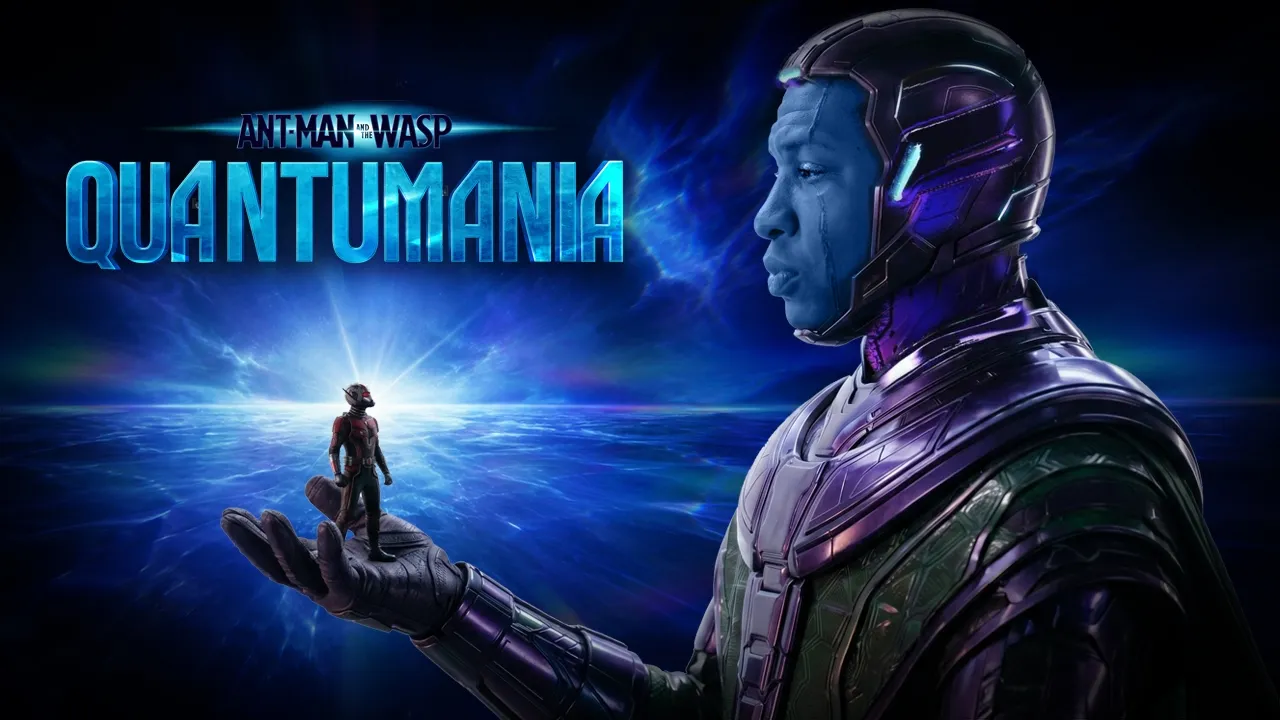

What if Ant-Man and the Wasp: Quantumania had ended on a gut-punch cliffhanger? Kang escapes. Scott Lang and Hope van Dyne are stranded in the Quantum Realm. And Cassie Lang, back on Earth, desperately searches for a way to bring them home. That was the original ending. And it was actually filmed. Marvel decided not to use it.
From a terrifying MODOK still wearing Yellowjacket’s suit as a monstrous exoskeleton, to a Cronenberg-inspired giant sentient ant voiced by Werner Herzog, to Bill Murray leading a full alien rebellion against Kang the Conqueror — the original vision for Quantumania was darker, weirder, and far more ambitious than what ended up in theaters. Here is every jaw-dropping detail of the Quantumania that never was.
Why Ant-Man 3 Was Never Meant to Be Another Comedy
The first two Ant-Man films had a very specific function in the MCU. Both were released in the aftermath of massive Avengers events — Ant-Man followed Age of Ultron, and Ant-Man and the Wasp followed Infinity War. They were heist comedies, lightweight family stories, and welcome palette cleansers from end-of-the-world stakes.
But director Peyton Reed had a radically different ambition for the third film. He didn’t want Ant-Man 3 to feel like another comedic detour between more important chapters. He wanted it to feel like an Avengers-level event. And to achieve that, he believed Scott Lang needed an Avengers-level villain. Enter Kang the Conqueror.
The Fascinating Way Writer Jeff Loveness Reimagined Kang
For screenwriter Jeff Loveness, the key challenge was differentiating Kang from Thanos. He didn’t want to simply repeat the same beats. His solution was inspired and unexpected: rather than introduce Kang at the height of his power, Loveness wanted to meet him after everything had already gone wrong.
Loveness compared it to Napoleon — not the victorious Napoleon conquering Italy, but the defeated Napoleon in exile. The man who once seemed unstoppable, now trapped, humiliated, and desperate to reclaim what he lost. He also described Kang as the Great Gatsby of the multiverse — obsessed with recreating a past that may be beyond his reach.
Early drafts of Quantumania reportedly included far more of Kang’s backstory, but those details were cut with the intention that they would be explored in Avengers: The Kang Dynasty. If the leaked Kang Dynasty script is to be believed, that backstory would have made him a deeply tragic figure — a man who failed to save the woman he loved and their child.
Loveness even compared his approach to how Darth Vader’s backstory was slowly revealed across three Star Wars films. The mystery, the depth, the layers — it was all building to something massive. Interestingly, at one point Loveness considered writing Kang as more of a comedic loser to match the tone of the earlier Ant-Man films. But after seeing Jonathan Majors’ electrifying debut in the Loki finale, he abandoned that direction entirely and went full tilt with a tortured, Silver Age super-villain version of Kang.
The Shocking Original Ending That Marvel Actually Filmed
One of the most common criticisms of Quantumania was that Kang — hyped as the next great Avengers-level threat — was defeated in his very first major big-screen appearance by Ant-Man of all people. After spending the entire film building him up as a terrifying, multiversal force unlike anything Scott Lang had ever faced, the movie essentially let Scott and Hope kill him and walk home for a happy family reunion. Even Scott’s brief moment of existential dread — wondering if killing Kang might unleash something worse — was played as a joke.
The original ending would have played it very, very differently. In this version, which was actually shot, the story goes like this:
- Kang absolutely brutalizes Scott Lang in their final battle.
- Hope returns for Scott, refusing to abandon him — but instead of them defeating Kang together, Kang turns the tables on both of them.
- Kang escapes. Scott and Hope are left stranded in the Quantum Realm.
- In an emotionally devastating moment, Hope tells Scott that when she was pulled into the probability storm, she saw every other version of herself across the multiverse. And after seeing all those lives, she realized there wasn’t a single version she’d want to live if Scott wasn’t in it.
- Back on Earth, Janet, Hank, and Cassie are forced to accept that Scott and Hope didn’t make it home. Hank tries to hold the family together. But the emotional weight falls on Cassie, who has now lost her father to the very realm she helped reopen.
That alone would have been a gut-wrenching finale. But there was also an original post-credits scene that would have driven the emotional stakes even higher.
The Deleted Post-Credits Scene That Would Have Set Up Everything
Instead of immediately cutting to the Council of Kangs (which is what we got), the original version of the film reportedly ended with a post-credits scene featuring Cassie Lang back on Earth. Sitting alone in front of a computer, she runs simulation after simulation, desperately trying to find a way back into the Quantum Realm to rescue her father and Hope.
Then, as she keeps running the simulations, something catches her eye. We don’t know exactly what it was — a signal, a doorway, a Kang variant, a glitch in the multiverse, or something even stranger lurking deep inside the Quantum Realm. All we know is that Cassie’s eyes go wide, and the film cuts to black.
So why did Marvel reshoot the ending just one month before release? The official story, according to Loveness himself, was that they realized stranding Scott in the Quantum Realm again too closely mirrored the ending of the second film. But many fans suspect that the plot leak — which detailed the film’s storyline well before release — may have also played a role in the decision.
MODOK’s Original Design Was Genuinely Terrifying
The MODOK in Quantumania was widely criticized as a goofy, over-the-top disappointment. But early concept designs for the character told a completely different story. Concept artist Aleksi Briclot created a version of MODOK that was genuinely nightmarish.
In this original design, Darren Cross didn’t just become a giant floating head. Instead, the Yellowjacket suit itself was repurposed into a massive, monstrous exoskeleton surrounding him. The Yellow Jacket armor became the horrifying scaffolding that kept him alive and mobile. It was the logical, horrifying conclusion to what happened to Darren Cross at the end of the first Ant-Man — not a punchline, but a true monster born from his destruction.
Loveness ultimately took the character in the opposite direction, leaning hard into the absurdity. He based the character partly on Frank Grimes from The Simpsons — a bitter, deeply insecure loose cannon who feels like the entire universe has humiliated him while everyone else moves on. Funny? Absolutely. But the scarier version was on the table.
The Probability Storm’s Bizarre, Deleted Nightmare
The probability storm sequence in Quantumania — where Scott encounters multiple versions of himself — was originally intended to be longer and far more psychologically disturbing. In the original conception, the storm included a giant, Cronenberg-inspired, man-sized ant. This creature would have been built practically by the legendary Stan Winston Studios and voiced by none other than Werner Herzog.
The ant would have tormented Scott, tearing into him verbally over how weak and insignificant he truly was. It reportedly had the unsettling line: “All men are ants, but these ants are not men.” Even more bizarrely, the ant would have called Scott father — giving the whole sequence a deeply strange, Island of Dr. Moreau quality. Like some warped creature born from Scott’s own deepest fears and failures.
Bill Murray’s Lord Krylar Was Supposed to Join the Rebellion
In the final cut of Quantumania, Lord Krylar — the quantum realm aristocrat played by Bill Murray — appears briefly as Janet’s old flame and is then dispatched without much fanfare. But the original script had much bigger plans for him.
In a deleted scene, Krylar shoves an unknown alien off a cliff. According to actress Katie O’Brien, Murray also filmed an entire space pursuit sequence that ended with Krylar somehow ending up captured by Kang and thrown in prison alongside Jentorra, the freedom fighter that Cassie later breaks out.
But it goes even further. Rumors suggest Krylar was originally set to turn on Kang entirely, join the rebellion, and raise an army of humanoid aliens from within the Quantum Realm to fight back against the Conqueror. Bill Murray’s character going from self-serving aristocrat to unlikely revolutionary hero? That would have been one of the most unexpected and entertaining arcs in the entire film.
There was also a planned cameo involving Hank Pym’s personal life. While Janet was stranded in the Quantum Realm, Hank apparently had a brief romance with a woman named Linda. The role of Linda — likely in a flashback — was offered to Jennifer Coolidge, star of White Lotus and American Pie’s iconic “Stifler’s Mom.” Loveness spoke to Coolidge over Zoom, but ultimately the cameo was dropped.
The most likely reason Bill Murray’s role was significantly reduced before release? Multiple sexual assault allegations were made against him shortly before the film came out, placing Marvel in a difficult position.
What Went Wrong: The Rise and Fall of the Kang Era
At the time, Marvel clearly intended Quantumania to be the true launchpad for Kang as the next defining MCU villain. Jeff Loveness wasn’t just writing Quantumania — he had also been hired to write Avengers: The Kang Dynasty. The threads introduced here were supposed to spiral directly into the next massive crossover event.
Then Quantumania came out, and the reaction was not what Marvel needed. The film underperformed both critically and commercially. The most common complaint? Kang didn’t feel like the next Thanos. He was beaten by Ant-Man in his very first major outing.
To be fair to Loveness, that was partly by design. He was deliberately trying to differentiate Kang from Thanos by introducing him at a low point — a fallen conqueror clawing desperately for relevance. But the risk of that approach is that audiences’ first real impression of the MCU’s new Big Bad was of a villain who got defeated twice in the same film. It deflated enthusiasm for Kang at precisely the moment Marvel needed audiences to buy into him the most.
Then came the far larger problem: Jonathan Majors’ legal troubles. Disney suddenly found itself managing a massive PR crisis. Behind closed doors, Marvel faced a frantic internal debate — recast Kang and use the multiverse as a convenient in-universe explanation, or scrap the character entirely? The studio ultimately chose the latter. Fan enthusiasm for Kang had already been damaged, and Majors’ conviction was the final nail in the coffin. Loveness and his Kang Dynasty script were shelved. Marvel pivoted to Doctor Doom.
The Saddest “What Could Have Been” Story in MCU History
Ant-Man and the Wasp: Quantumania stands as one of the strangest, most melancholy “what could have been” stories in Marvel history. It isn’t just a movie full of deleted scenes and cut ideas. It was a movie specifically designed to launch an entirely new era of Marvel storytelling — a Kang Dynasty that would have shaped the MCU for years. And Marvel ultimately walked away from all of it.
The original film, with its cliffhanger ending, its terrifying MODOK, its Werner Herzog-voiced nightmare ant, and its Bill Murray rebellion arc, sounds like a wilder, riskier, and arguably far more memorable version of the movie. Whether it would have landed better with audiences, we’ll never know. But one thing is certain: the Quantumania that almost existed was far more ambitious than the one we got.
What do you think — would the original ending and darker tone have saved the Kang era, or was the character always going to be a tough sell? Let us know in the comments below.
About Post Author