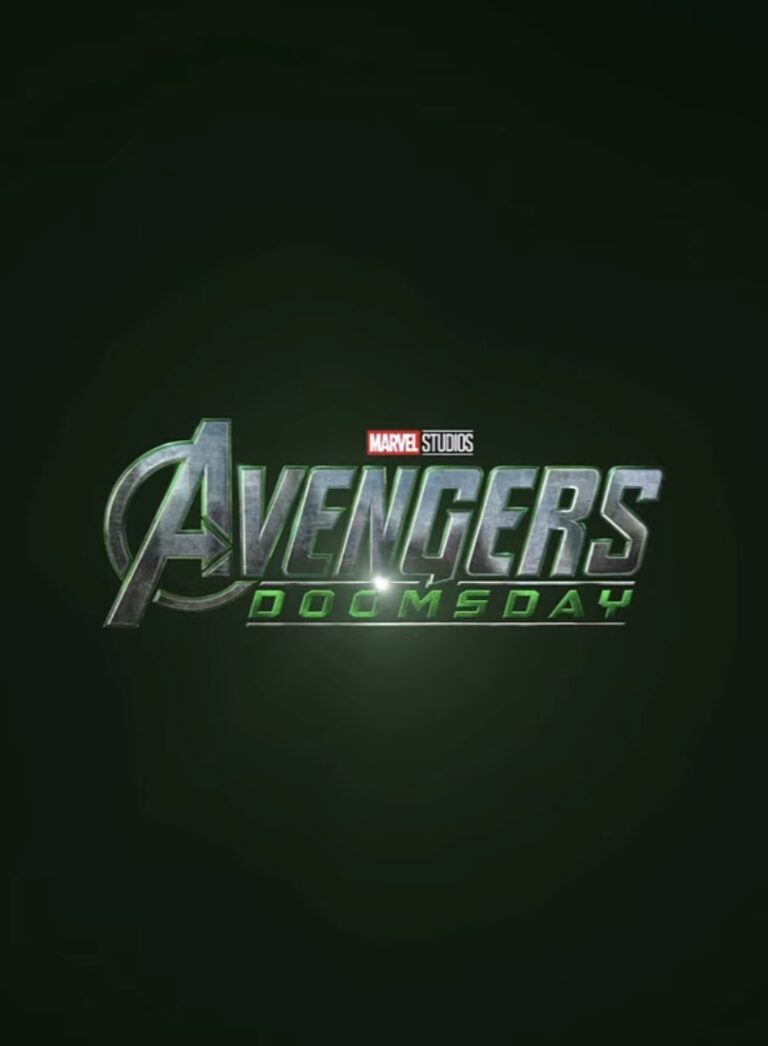

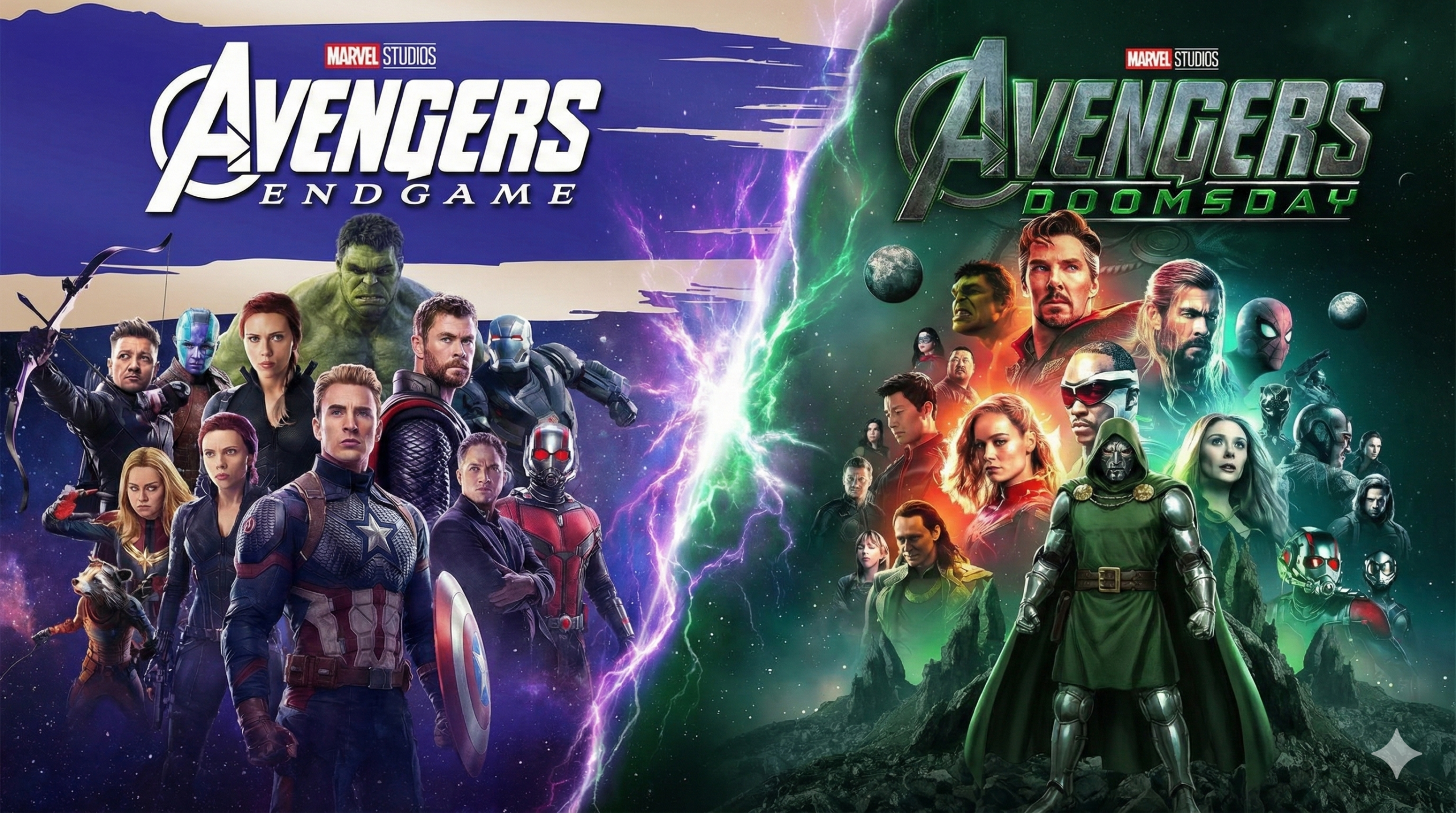

Marvel Studios has just dropped a massive bombshell that has the entire MCU fanbase buzzing with excitement and speculation. According to trusted industry insider Daniel RPK, Avengers Doomsday is a direct sequel to Avengers Endgame. This revelation fundamentally changes how we understand the future of the MCU and raises critical questions about what happened after Tony Stark’s final sacrifice.
The Re-Release: More Than Just a Nostalgia Trip
Marvel Studios announced that Avengers Endgame would be returning to theaters in September, which initially seemed like a standard re-release to hype up fans before Doomsday arrives in December. However, this decision now appears to serve a much deeper purpose. Rather than being merely a marketing tactic, the re-release functions as a primer for audiences to refresh their memories on Endgame’s crucial events before Doomsday picks up directly from where that epic conclusion left off.
What “Direct Sequel” Actually Means
If Doomsday is truly a direct sequel to Endgame, it means the film will pick up from the exact moment Steve Rogers returned the Infinity Stones to their respective timelines and chose to live out his life with Peggy Carter. This is a stunning revelation because it suggests that the entire Multiverse Saga—all the projects we’ve watched since Endgame’s release—exists in a particular timeline or context relative to where Doomsday begins.
The implications are staggering: We’re expected to get significant character returns, including Steve Rogers and Chris Evans. Anthony Mackie has already confirmed in interviews that Doomsday will deal with the emotional aftermath of Tony Stark’s snap with the Infinity Gauntlet, suggesting that his death and its consequences will be central to the new film’s narrative.
Rethinking the Multiverse Saga
Here’s where things get genuinely interesting—and potentially concerning for some fans. If Marvel is going back to Endgame as the starting point for Doomsday, what does that mean for everything that happened during the Multiverse Saga? The logical assumption is that the events leading into Doomsday’s central conflict will be concurrent with—and eventually lead directly to—the current MCU timeline.
In other words, Marvel might be essentially saying: “Everything that happened in the Multiverse Saga still matters, but we’re now revealing how it all connects back to the foundational events of Endgame.” This could make the Multiverse Saga feel less like a separate chapter and more like one continuous narrative thread stretching from Infinity War through Secret Wars.
The Soft Reboot and Strategic Mulligan
There’s been significant speculation about Kevin Feige using the Doomsday event as an opportunity for a “soft reboot”—not just in terms of recasting characters, but potentially in undoing or retconning specific events from the Multiverse Saga that didn’t resonate with audiences or aligned with Feige’s original vision.
According to industry insiders like Alex Perez from the Cosmic Circus, there’s a real possibility that Marvel could use this narrative reset to undo specific storylines or events that frustrated the fanbase or didn’t meet creative expectations. However, this doesn’t mean a complete erasure of the Multiverse Saga. Most of the 616 cast members featured during this period will likely remain intact, meaning their character arcs and the events they experienced will largely stay canon.
The Strategic Value of Connecting to Endgame
Instead of viewing this as Marvel admitting the Multiverse Saga “wasn’t good,” consider a different perspective: connecting Doomsday directly to Endgame actually raises the stakes exponentially. By tying together the Infinity Saga’s climax with the Multiverse Saga’s conclusion and leading into Secret Wars, Marvel isn’t diminishing what came before—it’s expanding the scope of what came before.
The Russo Brothers and Kevin Feige are creating one unified narrative arc where the stakes established in Infinity War and Endgame aren’t being abandoned or replaced. Instead, they’re being leveraged to make the Doomsday and Secret Wars events feel like the inevitable culmination of a story that began over a decade ago.
The Robert Downey Jr. Situation
The return of Robert Downey Jr. as Victor Von Doom adds another fascinating layer to this announcement. Some might interpret this as Marvel scrambling to use legacy characters and actors to save Doomsday, but a more charitable reading suggests Marvel identified an opportunity: the original Kang storyline wasn’t working as intended for their Secret Wars narrative, and Dr. Doom has always been central to Secret Wars in the comics.
By bringing Downey back in a new role, Marvel gets to maintain continuity (potentially suggesting Doom’s appearance has something to do with Tony’s snap) while pivoting to a more compelling villain. The question now becomes: Is there a connection between Tony’s final sacrifice and Victor Von Doom’s rise?
The Risk Factor: Recontextualizing Endgame
Let’s not ignore the genuine risk here. By creating a direct narrative link to Endgame, Marvel runs the risk of recontextualizing that film in ways that could alienate fans. If there’s some major revelation that fundamentally changes how we view Endgame’s third act—even in a small detail—it could spark significant backlash.
However, the Russo Brothers have demonstrated they understand the weight of Endgame’s legacy. If they’re bringing Steve Rogers back and delving into the emotional consequences of Tony’s death, they’re doing so with clear intention and respect for what Endgame accomplished.
What This Means for Marvel’s Future
Ultimately, announcing that Avengers Doomsday is a direct sequel to Endgame serves multiple purposes:
- It provides a narrative justification for why Endgame is being re-released—it’s essential context, not just nostalgia.
- It suggests that the Multiverse Saga, while perhaps not perfectly executed in every project, remains narratively significant to the larger MCU story.
- It gives Kevin Feige and the Russo Brothers a framework for “correcting” specific storylines while maintaining the overall continuity.
- It raises the stakes for Secret Wars by making it the culmination of two interconnected sagas spanning from Infinity War to Endgame and beyond.
- It explains why bringing back Chris Evans and dealing with Tony’s death remains central to the MCU’s future.
The Theater Experience
One final thought: Endgame’s re-release in September could be genuinely special. If fans know that Doomsday is picking up directly from that film, there’s potential for a communal theater experience where audiences get to re-experience the Infinity Saga’s conclusion together, remembering what it felt like to watch Tony make the ultimate sacrifice.
Conclusion
Marvel Studios’ announcement that Avengers Doomsday is a direct sequel to Endgame is a masterstroke from a narrative perspective. It reframes the entire post-Endgame MCU as part of one interconnected story rather than a series of disconnected projects in different timelines. Whether this leads to subtle timeline adjustments, major character returns, or unexpected revelations about Tony Stark’s death, one thing is clear: the Infinity Saga’s legacy isn’t being abandoned—it’s being honored and leveraged to create something even bigger.
The September Endgame re-release is no longer just a re-release. It’s a necessary refresher before we embark on the final chapter of the MCU’s most ambitious storytelling endeavor yet.
About Post Author