
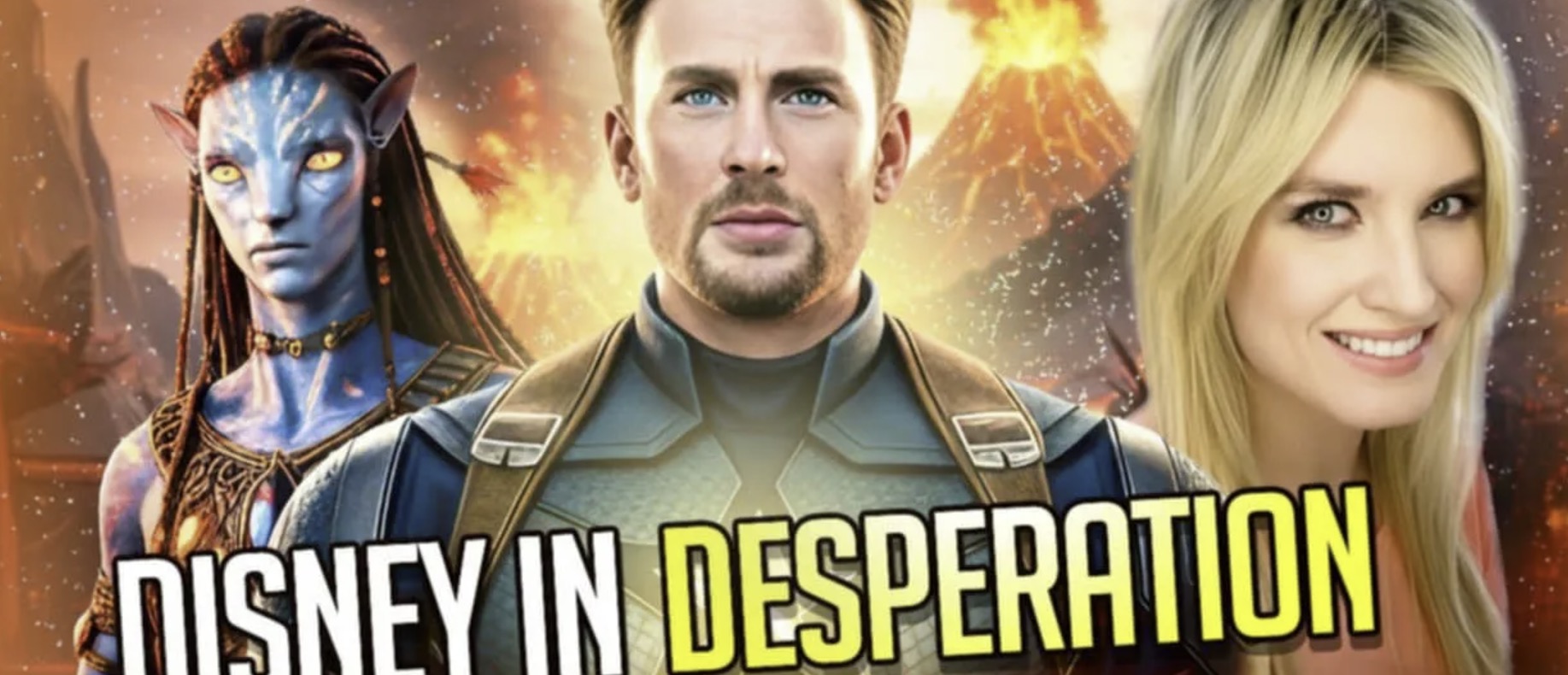

With CinemaCon 2025 done and dusted and the first Avengers: Doomsday trailer making waves among lucky press attendees in Las Vegas, the conversation in the Marvel fandom has turned to one very uncomfortable question: what happens to the mountain of unresolved storylines from Phases 4 and 5? The Russo Brothers are calling Doomsday a direct sequel to Endgame. Marvel insiders are hyping it as the next big thing. But critics and longtime fans are asking — what about everything that came in between?
Marvel’s Phase 4 & 5 Track Record: A Year and a Half of Flops
Let’s not sugarcoat it: looking back at everything Marvel Studios has released from January 2025 to now, the track record is grim. Daredevil: Born Again Seasons 1 and 2, Wonder Man, Thunderbolts, Captain America: Brave New World, Fantastic Four: First Steps, and Ironheart — none of these have been genuine hits.
Daredevil: Born Again has earned praise from the fans who watched it, and its Metacritic and Rotten Tomatoes scores are relatively high. But the audience numbers simply aren’t there. Wonder Man, despite being picked up for a second season, didn’t chart — though its low cost likely justified the renewal. Thunderbolts flopped. Fantastic Four: First Steps was the most successful of the recent releases and still underperformed. Captain America: Brave New World reportedly cost a fortune due to extensive reshoots, with insiders from within Disney itself confirming the story.
The MCU at this point, say critics, resembles what the DC Extended Universe looked like before James Gunn’s takeover — a string of obligatory films with no real momentum behind them. There’s buzz around Doomsday, sure. But that buzz is almost entirely driven by nostalgia for the characters who built the MCU in the first place, not by anything the post-Endgame era produced.
Avengers: Doomsday is shaping up to be one of the most expensive films ever made — potentially surpassing Avatar. While the true budget will likely never be fully disclosed, the numbers being discussed are staggering.
The Russo Brothers alone are reportedly commanding $80 to $100 million in director fees, not counting backend deals. Robert Downey Jr. is believed to be earning somewhere between $50 to $100 million for his return, again before backend compensation. Chris Evans’ deal hasn’t been publicly confirmed, but it’s not expected to be modest. Add Hugh Jackman, Tobey Maguire, and a cast rumoured to include 35 or more characters — none of whom are working for scale — and the price tag becomes eye-watering.
All of this is happening while the film is still in post-production and Marvel has reportedly fired a significant portion of its visual effects team. It’s an unusual combination — record-breaking budgets alongside major organizational upheaval. The pressure on Doomsday to deliver is unlike anything Marvel has faced before.The Cost Problem: Doomsday’s Staggering Budget
The central controversy sparked by the video is a debate between fans about what the Russo Brothers actually mean when they say Doomsday picks up where Endgame left off. One camp argues this is simply a story-level statement: the film revisits Steve Rogers’ decision to travel back in time, explores how that choice impacted the multiverse, and follows those narrative threads. Phases 4 and 5 still happened within the story.
The other camp, however, asks a more pointed question: if Phases 4 and 5 are still canon and still matter, then what happens to the at least 17 major open plot threads those phases left dangling? Here’s just a sampling of what the MCU hasn’t answered yet:
- White Vision (to be addressed in the upcoming Vision Quest series, but not connected to Doomsday)
- Sharon Carter as the Power Broker (introduced in The Falcon and the Winter Soldier)
- The signal from space to the Ten Rings (from Shang-Chi)
- The Young Avengers / Champions
- Black Knight’s conversation with Blade after the Eternals
- The Celestials’ impending return for judgment
- Hercules’ post-credits appearance in Thor: Love and Thunder
- The Council of Kangs
- The Guardians of the Galaxy’s new lineup
- Monica Rambeau trapped in another universe with Beast (from The Marvels)
- Doctor Strange’s third eye and his journey with Clea into an incursion
The argument is simple: if these storylines genuinely mattered, Doomsday should address them. If they don’t get addressed — or get a single throwaway line of dialogue at best — then Phases 4 and 5 effectively did not matter at all.The “Direct Sequel to Endgame” Debate
One of the sharpest critiques in the video targets the ending of Avengers: Endgame itself — specifically Steve Rogers’ decision to travel back in time, live out his life with Peggy Carter, and hand the Captain America shield off to Sam Wilson.
For many viewers, this was always a problematic ending. Steve Rogers, a man who held an elevator full of HYDRA agents at gunpoint, who refused to let Bucky fall without a fight, who famously said he could do this all day — chose to sit on the sidelines of history. The Kennedy assassination, Vietnam, 9/11, the Cold War — all of it would have happened on his watch, and by the film’s logic, he just let it.
The Russo Brothers now appear to be using Doomsday to revisit and address the consequences of that choice — exploring how Steve going back in time may have affected the multiverse. This is both an opportunity to retroactively add meaning to a controversial decision and a tacit acknowledgment that the ending needed some patching up.
But that raises another thorny issue: if Steve Rogers living in the past caused multiverse ripples, what did those five years of the Blip do? The five-year time skip between Infinity War and Endgame — where half of all life was erased — left a scar on Marvel’s storytelling that was never properly healed. Spider-Man: Far From Home gestured at it. WandaVision touched on it. But the full weight of that event was never truly reckoned with, and Phase 4 largely moved past it as if it hadn’t happened.Steve Rogers’ Decision: Still Controversia
One of the more pointed observations from the video is the growing list of MCU Phase 4 and 5 characters who are confirmed or rumoured to be absent from Doomsday entirely:
- No Brie Larson as Captain Marvel
- No Teyonah Parris as Photon / Monica Rambeau
- No Tessa Thompson as King Valkyrie
- No Mark Ruffalo as the Hulk
- No She-Hulk
- No Guardians of the Galaxy (new lineup)
This is significant. Several of these characters were explicitly set up as future Avengers-level players. Captain Marvel was marketed as the most powerful hero in the MCU and was positioned to lead the next generation of Avengers. Monica Rambeau was left stranded in another universe at the end of The Marvels with major unresolved questions. The Guardians were handed an entirely new team and direction after James Gunn’s Vol. 3.
None of them, it seems, are making the cut for Doomsday. Their absence may be the clearest signal yet that whatever “Phase 4 and 5 still matter” means in the context of this film, the characters and storylines that defined those phases are being quietly set aside.What Characters Will NOT Be in Doomsdayl
Among the more explosive insider tidbits in the video is the claim, sourced from someone who reportedly worked on the film before being laid off, that Tobey Maguire appears in the beginning of Doomsday and is killed off early. The source, described as a genuine Marvel fan who loved many of the recent projects, framed it as the film’s way of immediately establishing stakes: by killing off “the single most popular character in all of Marvel outside of Robert Downey Jr.’s Iron Man” right at the start.
This tracks with what’s been rumoured about Doomsday’s structure: nearly everyone dies at some point, and then Doctor Doom assembles Battleworld from the wreckage of three colliding universes. Most characters would then be resurrected or reconstituted within Battleworld for the final act and the sequel, Avengers: Secret Wars.
The pattern is ambitious. The execution is the question. One concern raised is whether this approach will feel meaningful or chaotic — the final battle of Endgame was already criticized for being visually overwhelming, with so many characters on screen that individual moments got lost. A Doomsday that kills and resurrects dozens of heroes risks the same problem, amplified.The Tobey Maguire Rumour and the Stakes of Doomsday
One of the most damning arguments in the video is that Marvel had access to real marketing data about which characters and stories resonated with audiences — and ignored it.
The comic book publishing wing of Marvel Entertainment had years of sales data clearly showing which characters could carry their own titles and which couldn’t. Miss Marvel’s solo comic was cancelled multiple times. Captain Marvel’s series was repeatedly relaunched and cancelled. Ironheart, Riri Williams, black Captain America Sam Wilson’s solo run — all cancelled. The sales numbers made it crystal clear that audiences, even core comic book fans, weren’t buying into the “All New, All Different Marvel” era that tried to replace legacy characters with legacy-adjacent successors.
Marvel Studios, however, proceeded to adapt exactly these storylines — apparently without consulting or heeding the publishing data available to them within the same corporate structure. The argument: if the comics version of these characters couldn’t maintain readership in the tens of thousands, what made them think mass movie audiences numbering in the hundreds of millions would embrace them?
The answer, it seems, was ideology over storytelling — a desire to make a statement about representation that wasn’t matched by an equally strong desire to make a great story. And now, with Doomsday essentially soft-rebooting the MCU back toward the characters and formulas that actually worked, the implicit concession is being made: the experiment failed.Phase 4’s Identity Problem: Comics Data Marvel Ignored
Even if Doomsday is a massive success, the question of what the MCU looks like afterward remains deeply uncertain. The video argues that what Marvel needs is a hard reboot — recasting the core Avengers with new actors and starting fresh. Iron Man, Captain America, Thor, Hulk: new faces, new interpretations, new stories unencumbered by two decades of continuity.
But that doesn’t appear to be what’s planned. Instead, the apparent strategy is a soft reboot via Battleworld: carrying some characters over from the old continuity, integrating new ones (X-Men, Fantastic Four), and retroactively establishing that all of these groups existed in the same world all along. It’s narratively convenient but potentially confusing for casual audiences.
Key questions remain unanswered:
- Robert Downey Jr. is in his early 60s. Will he continue playing Dr. Doom beyond Doomsday and Secret Wars? Or is this a two-film commitment?
- Will Chris Evans eventually suit up as Captain America again in Secret Wars?
- How many of the Phase 4/5 characters — Simu Liu’s Shang-Chi, for example — survive and continue into the next saga?
- Pedro Pascal is set to play Reed Richards — will that version of Mr. Fantastic become a cornerstone of the post-Battleworld MCU?
- What happens to the Eternals? If they’re not mentioned in Doomsday or Secret Wars, will they simply be quietly abandoned?
These are the questions that will define the MCU’s next decade. And right now, Avengers: Doomsday is the hinge point on which everything turns.
Conclusion: High Stakes, Uncertain Outcome
Avengers: Doomsday arrives carrying the weight of the MCU’s failures and the hope of its renewal. It brings back the Russo Brothers, Robert Downey Jr., Chris Evans, and a roster of legacy characters that audiences actually love. It creates real stakes by reportedly killing off beloved characters early. And it attempts — in some form or another — to build a bridge from the golden era of the Infinity Saga to whatever comes next.
But the M-She-U dilemma remains. Whether Phase 4 and 5’s open plot threads get tied up meaningfully or get a single throwaway line of dialogue will tell us everything about how seriously Marvel is taking its continuity going forward. Whether the characters those phases introduced get to matter in Secret Wars or get quietly retired will define what kind of storytelling Marvel values.
The trailer has generated genuine excitement. The insiders are cautiously optimistic. The Endgame re-release is positioning Doomsday as a must-see cultural event. Now Marvel just has to deliver. We’ll find out in December.What Comes After Doomsday? The Hard Reboot Question
About Post Author